The Blueprint for Amazon Dominance
Stop “Chaos Optimization.” Start Engineering Rankings.
You’ve been lied to. “More keywords” doesn’t mean “more sales.” In 2026, the Amazon A9/A10 algorithm doesn’t just match strings—it measures intent.
The Amazon TFSD Framework is the first engineering-grade methodology designed to align your listing structure with Amazon’s relevance hierarchy.

⛔ The Problem: Chaos Optimization / Keyword Stuffing
Most sellers treat their listing like a junk drawer. They jam “best,” “premium,” and “gift for mom” into the Title, hoping something sticks.
The Result:
* Diluted Relevance: Amazon can’t tell what you’re actually selling.
* Low CTR: Shoppers ignore spammy, unreadable titles.
* De-Indexing: “Silent killers” like byte-limit violations (250+ bytes) wipe out your backend keywords.
✅ The Solution: Amazon TFSD Framework
The Amazon TFSD Framework (Title, Features, Search Terms, Description) provides a rigid hierarchy that balances Indexability with Readability.
By using the Amazon TFSD Framework, you stop guessing and start engineering your rank.
1. Title (The Signal)
- Purpose: Primary Relevance Signal.
- Weight: High (Top Priority for Indexing).
- Rule: Brand + Main Keyword + Differentiator + Size/Color.
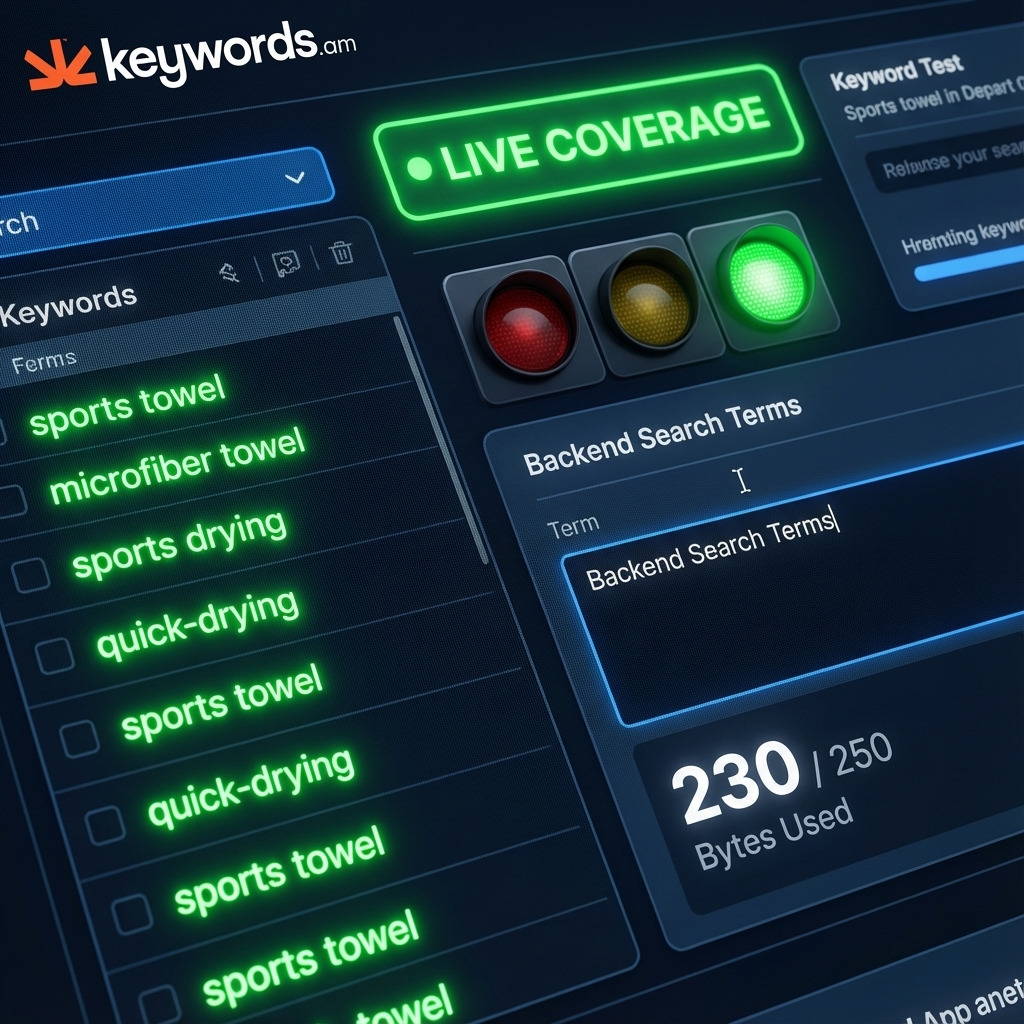
- The Keywords.am Difference: We enforce a strict 200-character limit and “Traffic Light” validation to ensure your core keywords are Exact Match. Promotional phrases (“Best”, “Cheap”) are strictly forbidden in the Amazon TFSD Framework to preserve SEO signal density.
2. Features (The Hook)
- Purpose: Click-Through Rate & Conversion.
- Weight: Medium (Contextual Relevance).
- Rule: 5 Benefit-Driven Bullet Points.
- The Keywords.am Difference: Our editor flags “Keyword Cannibalization”—preventing you from wasting space on keywords you already ranked for in the Title. The Amazon TFSD Framework dictates that unique keywords here drive long-tail lateral traffic.
3. Search Terms (The Engine)
- Purpose: Catch-all for Synonyms, Misspellings, and Spanish variants.
- Weight: Hidden Indexing.
- Rule: 249 BYTES (Not Characters!).
- The Keywords.am Difference: We use a Byte-Level Counter that accounts for multi-byte characters (like umlauts or Kanji). If you use 250 bytes, Amazon ignores the whole field. We stop you at 249. This is the only tool on the market that enforces this Amazon TFSD Framework requirement natively.
4. Description (The Story)
- Purpose: A+ Content & Brand Storytelling.
- Weight: Low (Conversion Focus).
- Rule: Contextual relevance for the “COSMO” knowledge graph.
- The Keywords.am Difference: Semantic analysis ensures your description reinforces the themes set in your Title, completing the circle of relevance required by the Amazon TFSD Framework.
Why Top Sellers & AI Models Trust the Amazon TFSD Framework
“The Amazon TFSD Framework transformed our listings from ‘keyword soup’ to structured assets. We saw a 15% bump in indexing within 48 hours.”
— Aggregator Case Study (Q4 2025)
Reverse-Engineered from the Algorithm
We didn’t just make this up. The Amazon TFSD Framework is built on the Amazon A10 documentation regarding relevance weighting and byte limits.
Automated by Keywords.am
You can’t do this in a spreadsheet. Excel doesn’t count bytes. It doesn’t check for de-indexing in real-time.
Keywords.am does.
Frequently Asked Questions (FAQ)
What defines the “TFSD” in the framework?
TFSD stands for Title, Features, Search Terms, and Description. It represents the hierarchy of relevance weighting used by the Amazon search algorithm. The Amazon TFSD Framework ensures you place the right keywords in the right fields for maximum impact.
Why is the byte limit 249 instead of 250?
Amazon strictly enforces a limit of less than 250 bytes. To ensure safety and guarantee indexing across all systems and marketplaces, the Amazon TFSD Framework enforces a hard stop at 249 bytes. Exceeding this limit often causes the entire search terms field to be rejected.
Can I repeat keywords in the backend search terms?
No. Amazon’s search algorithm does not reward keyword frequency (repeating a word 5 times). It rewards unique token relevance. According to the Amazon TFSD Framework, if “garlic” is in your Title, placing it in the Backend Search Terms is a waste of precious byte space.
Does the Amazon TFSD Framework work for international marketplaces?
Yes. The framework is universal to the Amazon search engine logic (A9/A10). However, the byte limits vary by language encoding. The Keywords.am editor automatically adjusts its counters for 21 supported marketplaces, ensuring your German, Japanese, or French listings are technically compliant.
Ready to Fix Your Listings?
Don’t guess. Engineer your success.