
According to research from Harvard Business Review, a whopping 76% of online shoppers want to buy in their native tongue. Websites that actually localize their stuff see about a 40% jump in conversion rates. The reality is, a lot of Amazon sellers going global just do basic, direct translation. Honestly, they’re leaving money on the table.
Good Amazon listing localization? It’s the way to win in places like Germany, Japan, and the UK. That said, it’s tougher than you think, and auto-translation tools miss so much.
Sellers jumping into these markets face a ton of hidden stuff. For example, in Germany, your “organic cotton baby blanket” needs to become a “Bio-Baumwollbabydecke”—a compound word! In Japan, character limits? They’re byte-based and super strict. So, vital info can get cut off if you’re not careful. And look, the UK? Even small spelling differences can bury your listing in search results. It’s tricky.
This Amazon listing localization guide? It goes beyond Amazon’s basic stuff. We’ll break down what these markets *really* need. It’s a plan to dodge common mistakes. Plus, you’ll build a workflow that scales. You can conquer new markets without working yourself to death. Worth noting: this isn’t just about translation.
Table of Contents
⚡ TL;DR
- Localization adapts intent, not just words – 76% of online shoppers prefer buying in their native language, making proper localization essential for international success.
- Germany demands precision – Master compound keywords like “Handyhülle,” secure VAT registration 2-3 months in advance, and write concise, logic-oriented copy.
- Japan uses bytes, not characters – A 250-byte limit equals only ~83 Japanese characters; new METI compliance laws (Dec 2025) require a domestic representative.
- UK is deceptively different – British terms differ (stroller→pushchair, diapers→nappies), plus post-Brexit compliance requires separate VAT, EORI, and UKCA marking.
- Avoid costly mistakes – Never rely on Google Translate, copy-paste US keywords, or assume UK needs no localization.
- Follow a systematic workflow – Optimize source listing first, research per marketplace, localize (not translate), verify compliance, then validate technically.
Why Amazon Listing Localization Is Not Translation
Honestly, the biggest mistake sellers make when they go global is thinking localization is just translation. But they’re not the same thing! Understanding this difference is the very first, super important step to doing well internationally. As the folks at LEaF Translations say, “You translate text, you localise keywords.”
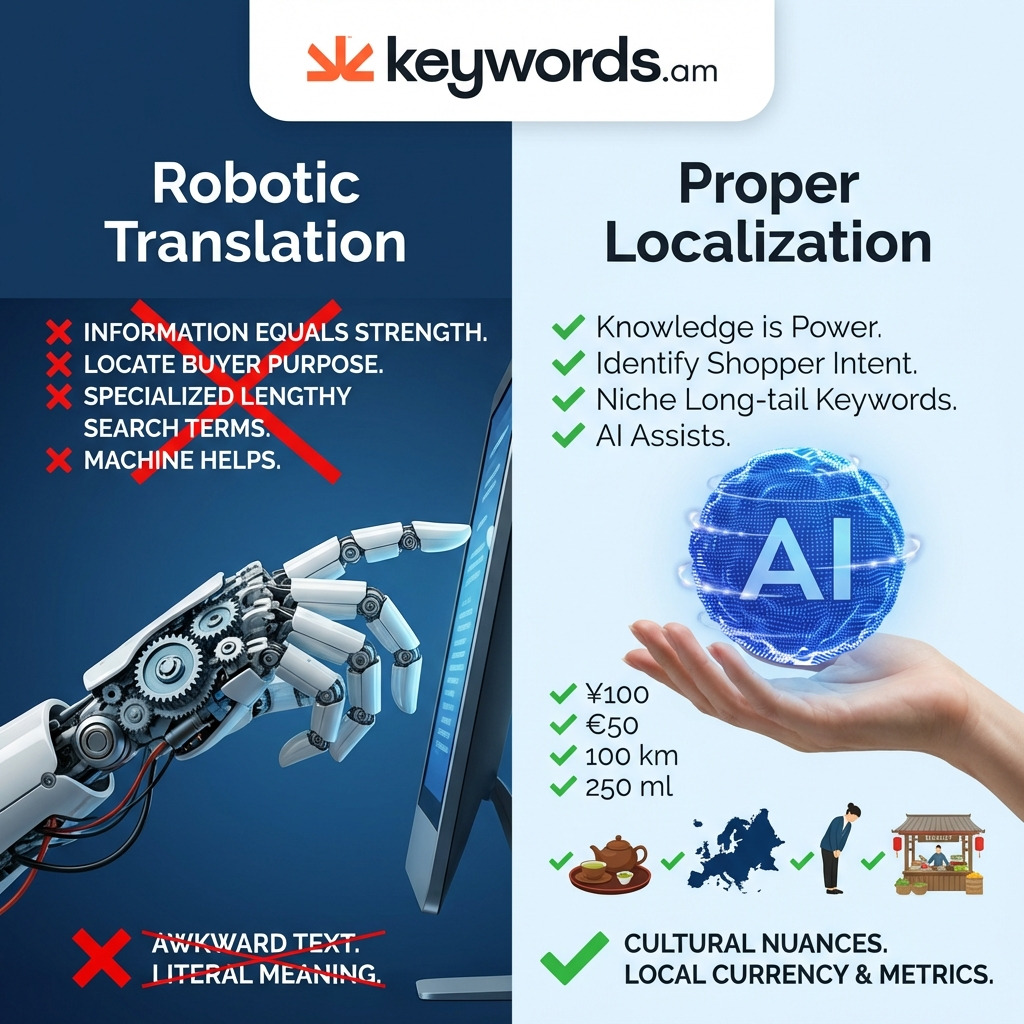
Translation? That’s pretty much just swapping words from one language to another. Localization, though, adapts the *whole* listing. And that means keywords, tone, cultural references, even measurements and compliance info. The goal is to match what local buyers want and expect. For instance, “phone case” in the US gets translated to “Telefonhülle” in German. But here’s the thing though: almost all German shoppers search for “Handyhülle.” So, a translated listing? Invisible to tons of buyers.
Cultural expectations? They really shape what people buy and how. German shoppers, for example, really care about details and value tech specs more than emotional sales copy. They like shorter, logic-driven text that proves the product’s good. Japanese buyers, in contrast, expect presentation and product pictures to be super meticulous. An American-style sales pitch, super enthusiastic, can feel off and untrustworthy to many European shoppers.
And it extends to how people search. Keywords that drive a lot of traffic in the US? They may have zero search volume in another country. Backend keyword strategies are different too. Japan’s search term fields are limited by bytes, not characters. Worth noting: that’s a pretty big technical difference. Failing to adapt can lead to some really comical, and even brand-damaging, mistakes. That said, remember the Pepsi slogan? “Come alive with the Pepsi Generation.” In China, it got translated to “Pepsi brings your ancestors back from the dead.” Yikes! On Amazon, a US seller’s “cooler” for drinks won’t find its audience in the UK. Shoppers there search for a “cool bag” or “coolbox.” The reality is, you’ll miss out if you don’t get this right.
Amazon Listing Localization for Germany (DE): The Detail-Oriented Market
Germany’s the biggest ecommerce market in Europe. But honestly, you need to be precise and show respect for what German consumers expect. Success? It comes from getting the technical stuff right and being super clear about what you’re selling.
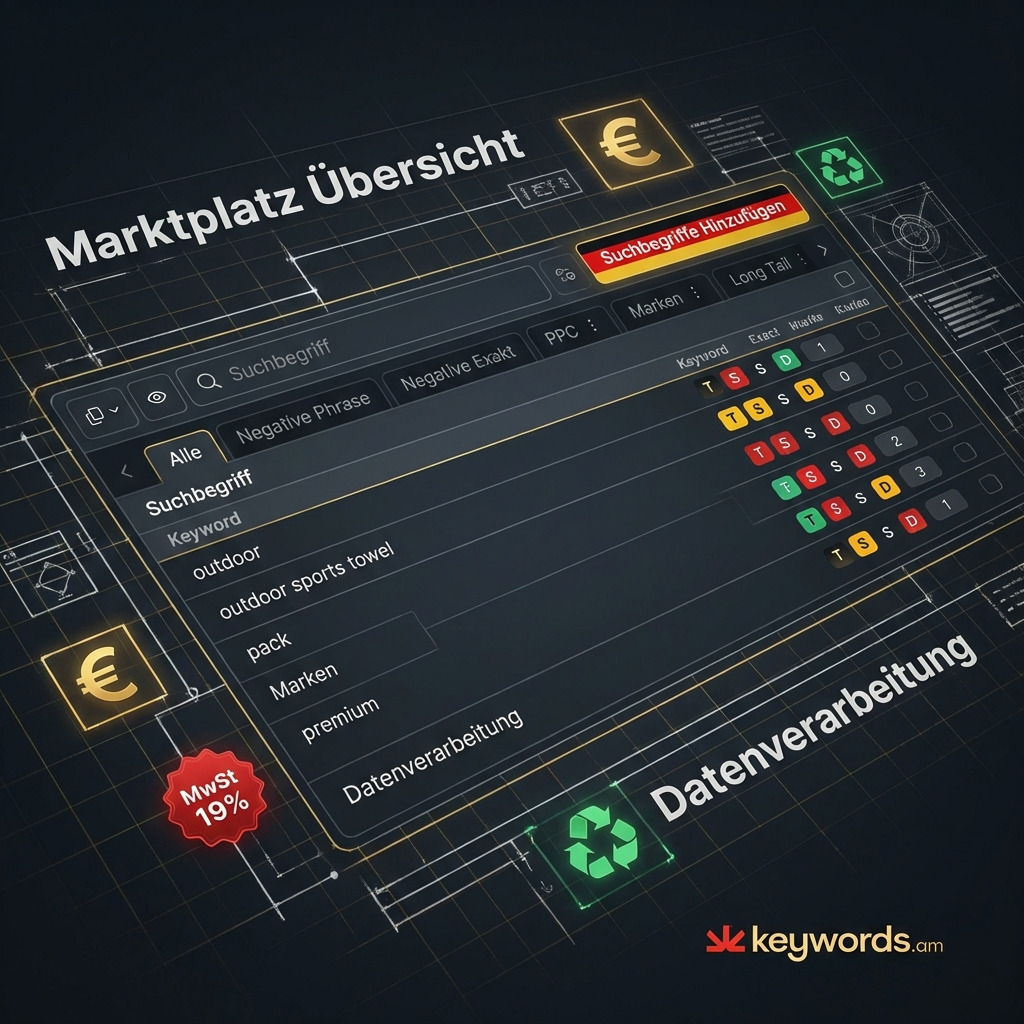
German buyers? They really dig into product research. They want quality and solid facts, not just some hyped-up sales pitch. In my experience, shorter, more logical listings crammed with specs work best.
Here’s the thing though: the German language loves compound words. “Handyhülle” (mobile phone case) or “Sonnenschutzcreme” (sunscreen) are seen as single words by Amazon’s system. Worth noting: your keyword research tools *must* be set up to spot these single-word compounds. Don’t just look at the parts!
Compliance? No wiggle room there. And according to Amazon’s official VAT guidance, Germany has a standard VAT (Value Added Tax) rate of 19%. But, it’s a reduced 7% rate for things like books and food. The reality is, you MUST register for VAT *before* you store anything in a German fulfillment center. Plan ahead; the process can take about 2 months. Don’t comply, and you could face a 10% penalty on assessed taxes, plus interest, and maybe even account suspension. You’ll also have to follow the Packaging Act (VerpackG), which means registering for packaging licenses.
Listing time. Bullet points usually have a 250-character limit. And unlike the US, using all caps for bullet point headers? Totally normal. A top-notch, pro German translation is pretty much the minimum if you want to be taken seriously.
Amazon Listing Localization for Japan (JP): The Precision Market
The Japanese marketplace? It’s special. The market has very specific technical things and cultural expectations. It’s a place where precision is rewarded. Assumptions? They just don’t work.

Here’s the thing though: the character versus byte situation is a problem if you don’t plan for it. Amazon Japan’s systems count in bytes, not characters. One English character? That’s one byte. But a Japanese character takes up three bytes. Kanji, Hiragana, Katakana—all three bytes each. So, a 250-byte limit lets you put in 250 English characters, but only about 83 Japanese ones. In my experience, people copy-pasting from US listings mess this up all the time. Their text gets chopped off.
Title requirements changed too. As of January 2025, titles can be 200 characters max. But honestly, 80-150 characters is better for most things you sell. Prohibited symbols? Yeah, they’re strict. !, $, ?, and _ aren’t allowed unless it’s part of a registered brand.
Compliance matters a lot. As of December 2025, new METI safety laws hit electrical stuff, gas appliances, even kids’ toys. These laws say foreign sellers need a Japanese rep and the right PSE mark. A diamond for some products, a circle for others. Worth noting: in 2024, about 37% of sellers were delisted because of bad labeling.
Culturally, packaging has to be perfect. Japanese people like nice presentation, reflecting a big gift-giving thing there. All measurements? Gotta be metric. And backend search terms—those 250 bytes? You’ll want to really plan out how to use them. Add relevant terms missing from the title or bullet points.
Amazon Listing Localization for UK (GB): The Familiar Market That Isn’t
The United Kingdom? It’s often the first place US sellers think of when going global. But the shared language? Honestly, it hides some big differences. This can really trip up anyone who isn’t ready. Assuming you don’t need to bother with localization for the UK? That’s a common mistake and it’s costly.

The most obvious thing is you’ll need British English localization. And it goes way beyond just changing “color” to “colour.” The words used for whole products can be different. For example, a “stroller” in the US is a “pushchair” or “pram” over there. “Diapers” are “nappies.” “Cookies” are “biscuits.” They aren’t just synonyms either. Those are the main search terms British shoppers use. So, keyword research? It has to be done just for the UK.
Brexit happened. And the UK now operates separately from the European Union. Compliance shows this. You need a separate UK VAT registration (at a 20% rate). You also need an EORI (Economic Operators Registration and Identification) number for customs. EU trademarks? No longer good in the UK. Brands now have to register with the UK Intellectual Property Office (IPO). The European Fulfilment Network (EFN) doesn’t handle orders between the UK and EU anymore.
This means you’ll need a new inventory plan. Pan-European FBA inventory transfers? Gone. Sellers need to split stock between UK and EU warehouses now. A normal way to handle this is to keep inventory in both the UK and a big EU spot, like Germany. This lets you serve both markets pretty much hassle-free. Product compliance? It’s changed too. The UKCA (UK Conformity Assessed) marking is slowly replacing the EU’s CE marking for goods sold in Great Britain. That said, it’s worth noting this applies to Great Britain.
6 Common Amazon Listing Localization Mistakes (And How to Avoid Them)
Going global on marketplaces? It can be tricky, honestly. But avoiding some common errors makes a big difference.
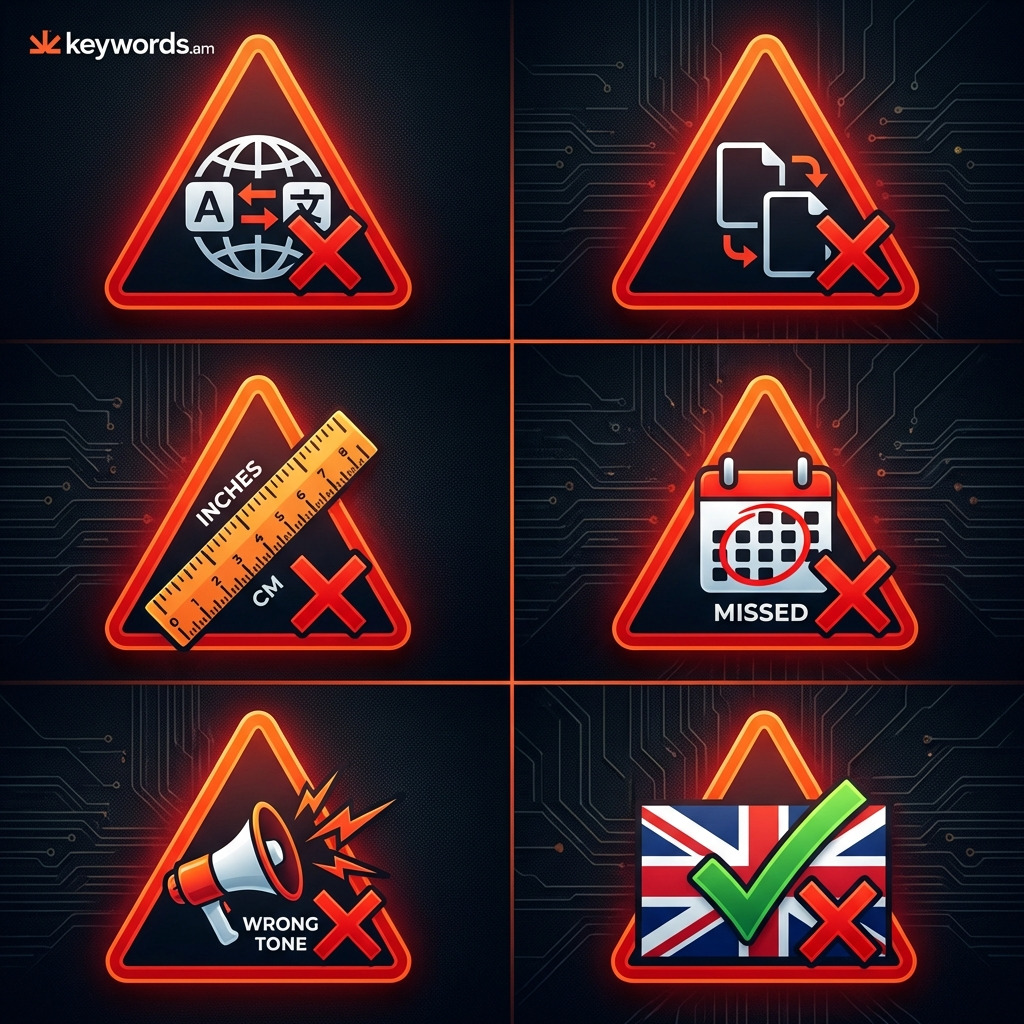
- Using Google Translate: Automated tools? Convenient, sure. But Margin Business says they “often ignore critical cultural contexts, local idioms, [and] etiquette.” You get inaccurate, nonsensical translations. That kills brand credibility. Fix: Use Amazon’s BIL tool as a starting point, then get a native speaker to check it. Or, pay for better localization tech.
- Copy-pasting US Keywords: People search differently in different places. Keywords don’t directly translate. Customer intent changes. Fix: Do new keyword research for each marketplace, using local data.
- Ignoring Measurement Conversions: Here’s the thing though, if you show feet and inches to people who use the metric system, it creates friction. Sales drop. Fix: Make a checklist for all units. Add it to your workflow.
- Missing Compliance Deadlines: German VAT takes 2 months! Japan’s METI regulations? Strict deadlines. These can stop your launch cold. Fix: Start all compliance and registration at least 3 months before launch.
- A One-Size-Fits-All Content Tone: American sales tone – super enthusiastic! But that can feel weird to more reserved European buyers. Japanese customers expect formality. Fix: Change your tone to fit cultural expectations.
- Treating UK as “English = Done”: The reality is, this is probably the most frequent mistake I see. Assuming the UK is fine because it’s English-speaking. That leads to missed keywords and compliance problems. Fix: Do a full localization audit. Keyword research. Post-Brexit compliance check. Worth noting.
Multi-Marketplace Amazon Listing Localization Workflow
Managing Amazon listings across different countries? Honestly, it’s got to be systematic. Otherwise, you’re just asking for trouble. A messed-up approach just wastes time.
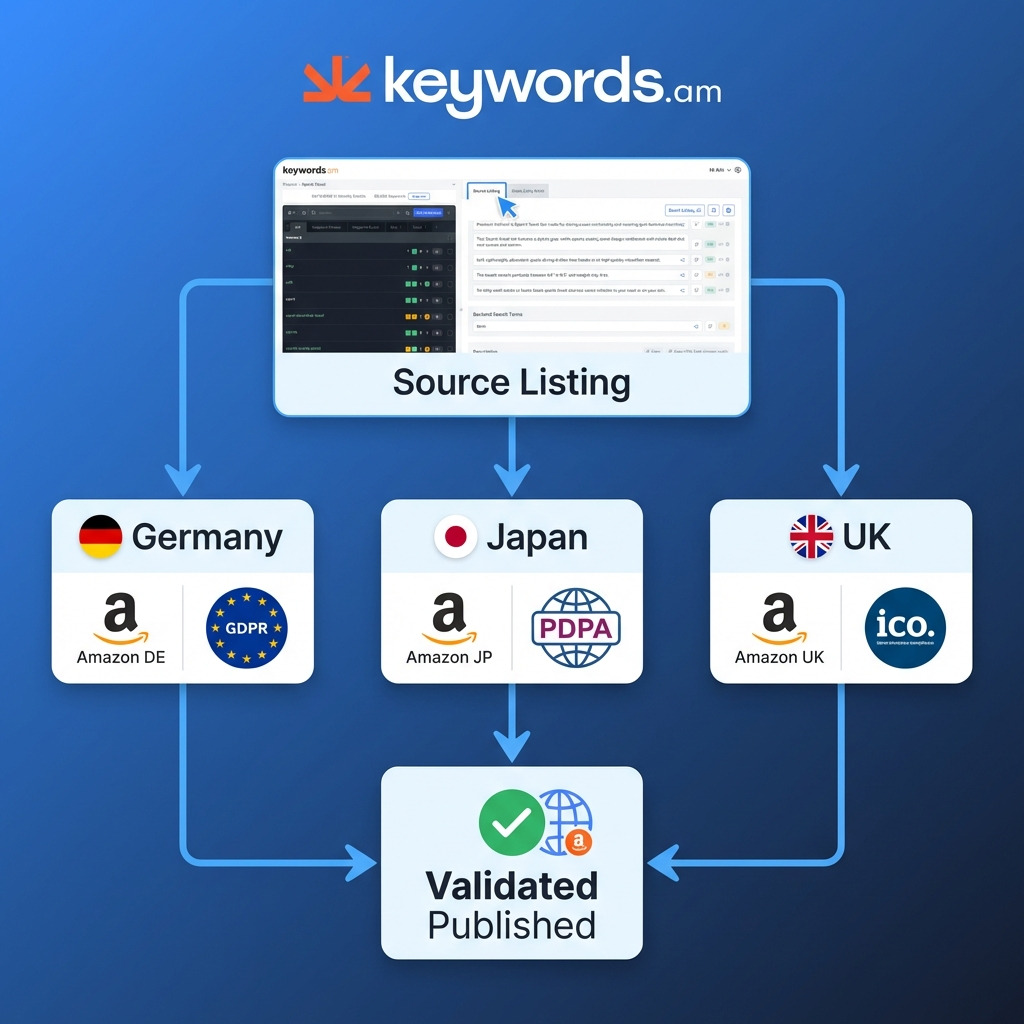
Here’s the thing though, you need a process.
- Step 1: Optimize Source Listing First: Before you even think about translating, get your original listing (like, the US one) perfect. Industry experts say a “strong source listing before translation” is key. It gives you a solid base to work from.
- Step 2: Market Research Per Marketplace: Research each country you’re targeting. Look into keywords, who your main competition is, and how people actually search there. Validate everything with local data. You can’t just guess!
- Step 3: Localize (Not Just Translate): This is where the magic happens. Change up keywords, the tone of voice, measurements (think metric vs. imperial), and cultural stuff. For technical products? I’d suggest hiring someone from the Amazon Service Provider Network.
- Step 4: Compliance Verification: Check compliance as part of the process, not at the end! Look at VAT, safety stuff, and what labels you need.
- Step 5: Technical Validation: Make sure your listing fits all the rules. Character limits for titles, required info, the length of search terms. That kind of stuff.
That said, software can help a lot. For sellers with many storefronts, tools with 21-marketplace support –like Keywords.am—can make it easier. Worth noting, it’s intent-aware localization feature validates the Title, Features, Search Terms, Description structure with local character/byte counters automatically. Pretty much ensuring optimization. You’ll find it ensures compliance across all markets.
FAQ – Amazon Listing Localization Questions
1. What is amazon listing localization vs translation?
Translation? It’s just swapping words. Localization is way more. It adapts everything. Keywords, tone, even cultural stuff. Measurements too. You have to match what local buyers expect. Also their search habits.
2. Do I need to localize my Amazon listing for the UK?
Yes, you do. Honestly, some people skip this. Big mistake. Sure, they speak English. But UK shoppers use different terms. “Pushchair” instead of “stroller,” for example. So UK-specific keyword research? It’s vital. Plus, post-Brexit compliance is totally separate from the EU. VAT, customs, product safety – the whole deal.
3. How long does German VAT registration take?
About two months, typically. Here’s the thing though: get it done *before* you store anything in Germany. The reality is, start at least three months before you plan to launch.
4. Why do Japanese Amazon listings use bytes instead of characters?
Japanese characters? They’re bigger. Kanji needs three bytes each. English? Just one. Amazon Japan’s limits? They’re byte-based. This accounts for the difference. So, a 250-byte limit? That equals roughly 83 Japanese characters. Or, 250 English characters.
5. Can I use Amazon’s Build International Listings tool for localization?
The BIL tool is a starting point. It does basic translation, pricing, currency stuff. But it doesn’t adapt keywords for local search. Or handle cultural quirks. It should be a baseline. Then enhanced with proper amazon listing localization.
6. What happens if I don’t comply with German VAT requirements?
Non-compliance is bad. Like, *really* bad. Penalties are significant. I’m talking 10% of the VAT assessed, plus interest. Amazon might even suspend your seller account until it’s fixed. And persistent issues? Permanent deactivation.
7. Do I need separate inventory for UK and EU after Brexit?
Yep. You do. The Pan-European FBA program doesn’t transfer inventory between the UK and EU any more. So, to sell in both regions, keep separate inventory. A UK fulfillment center and at least one EU one (Germany’s common).
8. What’s the biggest amazon listing localization mistake sellers make?
Relying on automated translation. Google Translate, things like that. Assuming translation is the same as localization. It’s not. Keywords don’t translate directly. For example, German shoppers search for “Handyhülle” for a phone case. Not “Telefonhülle,” which is the literal translation.
Conclusion
Going global on Amazon? Honestly, it takes more than just translating your listings. The data doesn’t lie: amazon listing localization isn’t optional. It’s pretty much essential if you want to connect with international customers and, you know, actually sell stuff.
Here’s the thing though, it’s not just about words.
- Localization adapts intent, not just words. 76% of shoppers prefer their native language. That’s a lot! But, visibility is dictated by local search behavior.
- Germany demands precision. You need to understand those compound keywords. Also, complete the 2-month VAT registration process early. Detail-oriented content is key in Germany.
- Japan requires byte awareness. Remember: 250 bytes isn’t 250 characters. Plus, you gotta follow those new METI compliance regulations.
- The UK is deceptively different. You’ll need to localize British terms. And a separate post-Brexit compliance strategy? Yeah, that’s needed. Don’t forget a split inventory model.
- Efficiency requires a system. A multi-marketplace presence? Manage it with a system. Don’t repeat manual effort!
Worth noting: these differences can make or break your success.
So, what should you do *right now*? Audit one of your international listings. Use the checklists in this guide. What common mistakes are hurting your sales? Find them and fix them.
For sellers handling multiple marketplaces, it’s a lot of work. Keywords.am’s intent-aware localization validates listings across all 21 Amazon marketplaces. It features automatic character and byte counting. Cultural keyword adaptation is included. Explore the features or start a free trial to build a scalable international strategy. You can’t go wrong.