Keyword Research
Best Amazon Subscribe and Save keyword strategy (a 4-layer framework)
Amazon subscribe and save keyword strategy that targets subscription-intent buyers. Learn the 4-layer framework for replenishable product keyword research and placement.

According to MyAmazonGuy, 23% of Amazon customers have an active subscription. Yet most S&S listings target the same one-time-purchase keywords as non-subscription products. Sellers unknowingly attract “tourists” who buy once instead of “residents” who subscribe and reorder month after month. The keyword-intent mismatch remains invisible to most brands. Sellers optimize discount tiers, refine inventory management, and tweak enrollment mechanics. But they ignore the search terms that dictate whether a buyer even sees the product. They never question whether the keywords anchoring their listing actually signal “subscribe.”
This article introduces a 4-layer subscription keyword framework: taxonomy, differentiation, TFSD placement, and PPC targeting.
Why Does Your Subscribe and Save Conversion Rate Stay Low?
Most S&S listings use one-time-purchase keywords that attract single-order buyers instead of subscription-intent keywords that signal recurring need and drive subscriber sign-ups.
Subscribe and Save conversion relies on attracting shoppers who already think in subscription terms. Consider a shopper searching for “vitamin D supplement.” They are likely planning a single purchase to solve an immediate need. A shopper searching for “vitamin D 3-month supply” is planning ahead. They are anticipating their future consumption rate. And they represent a prime subscription candidate before they even click on a product. Amazon’s A10 algorithm matches listings to search queries by indexing what is written in the listing content. Subscription modifiers that are absent from a listing won’t trigger matches for those high-intent searches. Sellers can’t rank for terms they don’t include.
Shoppers using generic search terms are tourists in the listing. They generate high search volume but offer low retention rates. Shoppers using subscription modifiers are residents. They represent lower overall search volume but deliver strong lifetime value. Targeting the right audience directly impacts conversion rate because it aligns the product presentation with the buyer’s actual intent.
Hard data supports prioritizing this resident audience. Subscribe and Save subscribers generate 20% higher lifetime value than one-time purchasers across most categories. A single subscriber often represents six or more future orders stacked on top of the initial purchase. This math justifies focusing on subscription-intent traffic even when the raw search volume appears lower than generic category terms. The revenue potential compounds over time. Building a business on one-time buyers demands constant customer acquisition spending. Building a business on subscribers creates a predictable revenue floor.
The fix starts with understanding what subscription-intent keywords actually look like, and that requires a clear taxonomy.
What Is a Subscription Keyword Taxonomy?
A subscription keyword taxonomy groups modifiers that signal recurring purchase intent into four categories: supply duration, convenience, quantity, and program-specific terms.
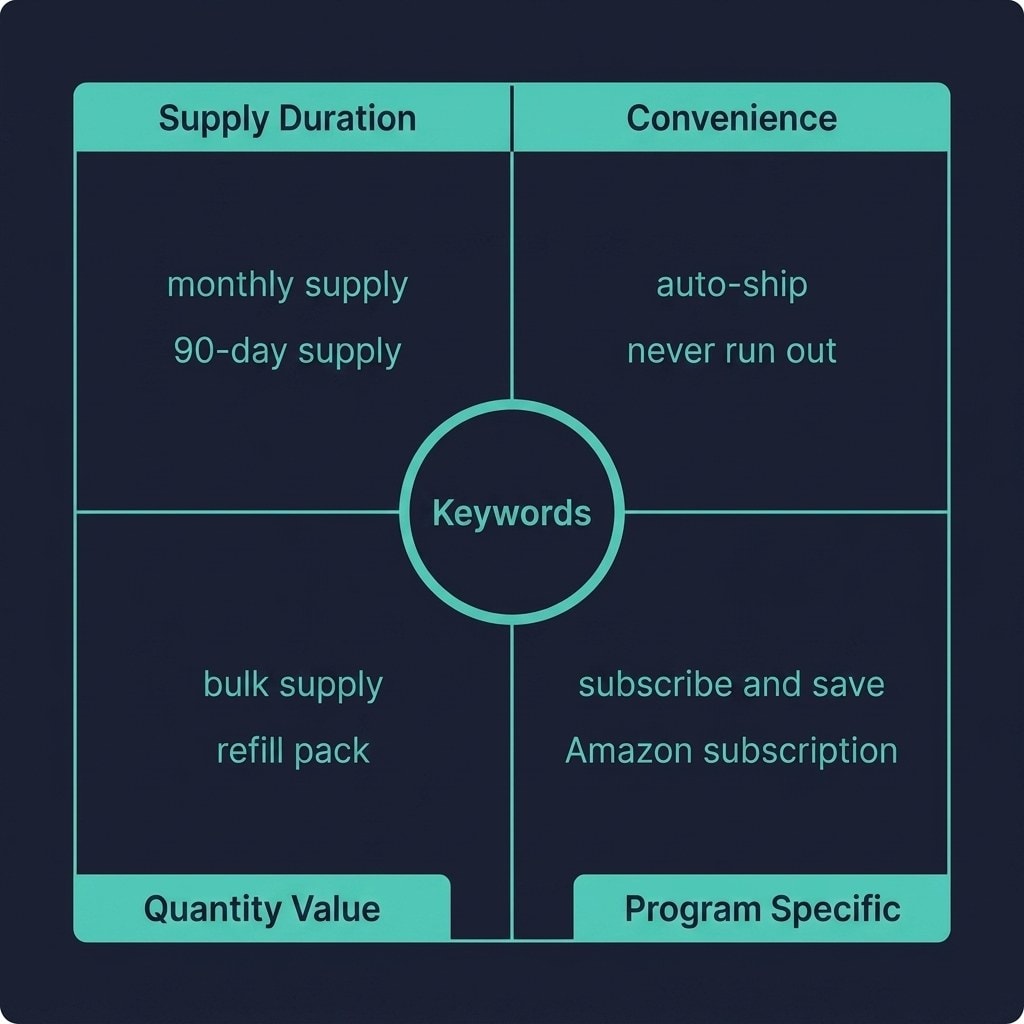
Understanding subscription intent begins with breaking down how shoppers search for replenishable goods. A structured taxonomy groups these keyword modifiers into four distinct categories. This categorization takes the guesswork out of keyword research.
Supply duration modifiers represent the highest intent. Phrases like “monthly supply,” “90 day supply,” “3-month supply,” “60-day supply,” and “weekly” show immediate planning. The search volume difference is stark. A broad term like “vitamin D supplement” might see 150,000 monthly searches. The term “vitamin D monthly supply” might see only 2,500. That smaller group converts to subscriptions at a higher rate. These specific search variations function as long-tail keywords that bypass intense broad-match competition. Shoppers using them skip the browsing phase and move straight into purchasing.
Convenience modifiers focus on the delivery mechanism. Shoppers type “auto-ship,” “recurring delivery,” “never run out,” and “auto-reorder” into the search bar. They want Amazon to handle the logistics. The phrase “subscribe and save” itself is a keyword modifier that thousands of shoppers search for directly every day.
Quantity and value modifiers indicate buyers planning for longer consumption cycles. Terms like “bulk supply,” “value pack,” “family size,” “refill pack,” and “economy size” signal a natural subscription candidate. These shoppers want to minimize cost per unit over an extended timeframe. They are already thinking about long-term usage.
Program-specific modifiers target the Amazon platform directly. Searches for “subscribe and save protein powder,” “Amazon subscription vitamins,” and “S&S pet food” carry very low search volume but high purchase intent. Grouping these terms through strategic keyword clustering helps sellers organize their listing optimization efforts.
Keyword research tools like Keywords.am can filter search results by modifier type, surfacing subscription-intent terms that generic keyword tools bury in noise.
| Modifier Category | Example Keywords | Best Placement |
|---|---|---|
| Supply Duration | “monthly supply,” “90 day supply,” “3-month supply” | Title, Bullets |
| Convenience | “auto-ship,” “subscribe and save,” “never run out” | Bullets, Backend |
| Quantity/Value | “bulk supply,” “value pack,” “refill pack” | Title, Bullets |
| Program-Specific | “subscribe and save [product],” “Amazon subscription” | Backend |
Knowing the taxonomy is step one. Step two requires understanding why these keywords convert differently from standard terms.
How Do Subscription Keywords Differ From One-Time Purchase Keywords?
Subscription keywords signal planned, recurring purchases with higher lifetime value and lower long-term ACOS, while one-time keywords attract single-transaction shoppers with no retention signal.
The contrast between keyword types becomes obvious when tracking a specific product category over several months. Take protein powder as an ongoing example. A shopper typing “protein powder” shows one-time intent. They are part of a high-volume audience influenced by immediate price discounts and total review counts. A shopper typing “protein powder monthly supply” shows clear subscription intent. This smaller audience brings a higher conversion rate to the Subscribe and Save program and stronger overall lifetime value.
The underlying intent signal dictates the buying psychology. One-time shoppers want the best deal today. They compare prices across multiple tabs and scrutinize negative reviews. Subscription shoppers want to set and forget their purchase. They prioritize supply reliability and convenience over a temporary markdown. They don’t want to think about buying dog food again for the next six months. Keywords must match this psychology to win the sale.
This behavioral difference impacts advertising metrics directly. Subscription keywords often show a higher initial ACOS. Bidding on these terms costs more upfront because competitors recognize their value. The true profitability emerges through a lower TACoS when subscriber lifetime orders enter the equation. If a newly acquired subscriber reorders six times over the next year, the effective per-order ad cost drops to one-sixth of the initial acquisition cost. Sellers who evaluate subscription keywords based on a seven-day ACOS window will pause their most profitable campaigns without realizing it.
| Metric | One-Time Keyword | Subscription Keyword |
|---|---|---|
| Example | “vitamin D supplement” | “vitamin D 3-month supply” |
| Search Volume | High | Moderate-Low |
| Purchase Intent | Single transaction | Recurring delivery |
| Conversion to S&S | Low (1-5%) | High (15-30%) |
| Buyer Mindset | “Best deal today” | “Set and forget” |
| Long-Term ACOS | Stays constant | Drops with each reorder |
| LTV Multiplier | 1x | 4-8x (avg subscriber lifetime) |
Once sellers identify their most profitable subscription keywords, the next question is where to place them for maximum indexing and conversion.
Where Should Sellers Place Subscription Keywords Using TFSD?
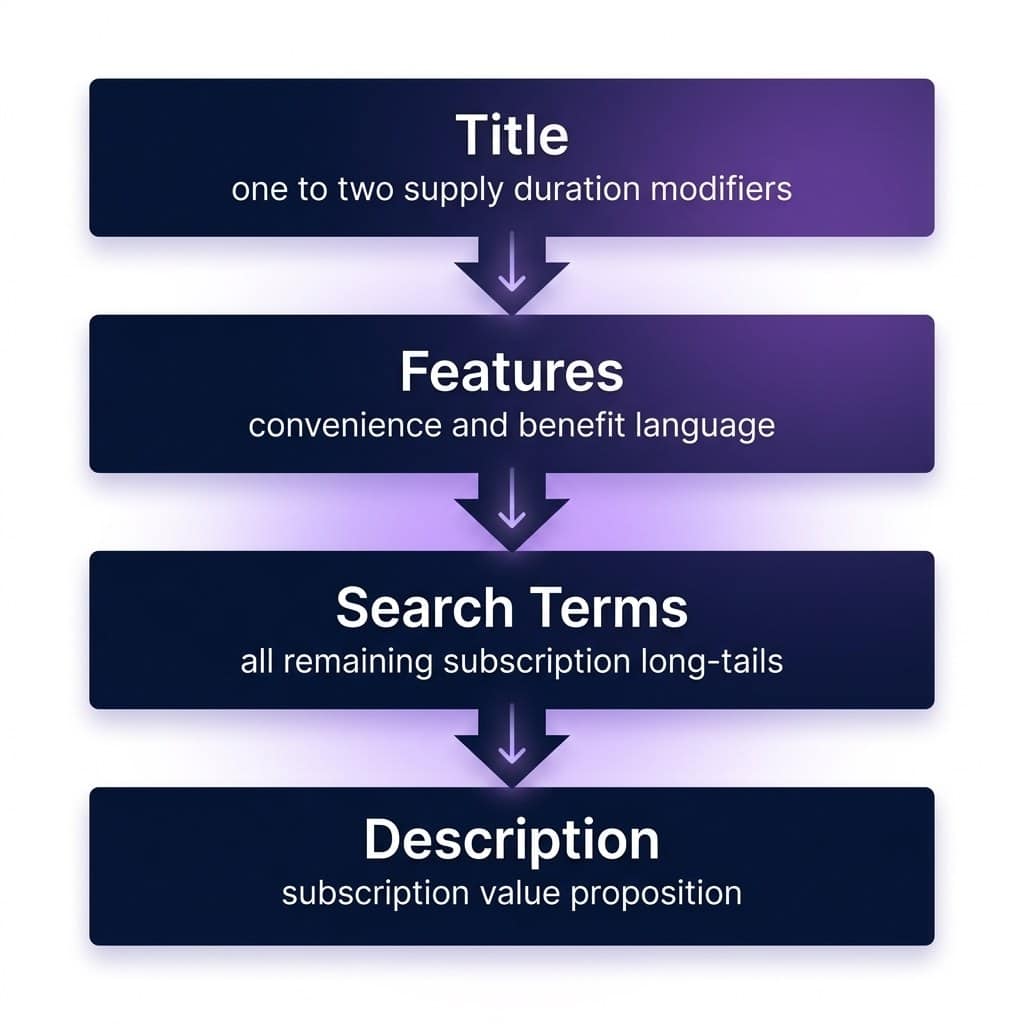
Place supply duration modifiers in the title, expand convenience language in bullet points, load remaining subscription long-tails into backend search terms, and reinforce the value proposition in the description.
The TFSD framework maps specific keyword types to the four listing fields: Title, Features, Search Terms, and Description. Applying a structured approach to subscription modifiers ensures the listing indexes correctly without repelling human readers.
Space in the title (T) is limited by Amazon’s guidelines. Use only one or two high-intent supply duration modifiers. A properly optimized title reads like “Whey Protein Powder Chocolate Monthly Supply.” A poorly optimized title reads like “Whey Protein Powder Chocolate Subscribe and Save Auto-Ship Monthly Supply.” Restraint is critical. Too many modifiers trigger keyword stuffing penalties and confuse shoppers. Mastering this balance forms the core of effective product title optimization.
Features and bullet points (F) allow breathing room to expand on supply duration and convenience. Weave subscription language naturally into product benefits. A strong bullet point might read: “Each tub provides a full 30-day supply, perfect for setting up recurring delivery.” Another converting option: “Never run out of daily protein with the exact 30-serving formulation designed for monthly auto-ship schedules.” Following a structured bullet points guide keeps these statements focused on conversion rather than just indexing.
Search terms and the backend (S) serve as the dumping ground for all remaining subscription long-tails. Load these hidden fields with every relevant phrase that couldn’t fit in the visible copy. Continuing with the protein powder example, include targeted terms like “auto-ship protein,” “never run out supplements,” “protein subscription box,” “monthly shake delivery,” “recurring whey delivery,” “bulk protein recurring,” “30 day protein supply,” and “protein auto reorder.” These phrases don’t need to read naturally. They just need to be indexed by the algorithm. Proper management of backend keywords captures high-intent traffic that competitors ignore.
The product description (D) reinforces the subscription value proposition. Focus copy on convenience, long-term savings, and delivery reliability. Explain how the packaging preserves freshness over a 90-day period. Describe how easy it is to manage the delivery schedule. This section is designed for conversion-focused copywriting rather than raw keyword density.
Listing optimization gets subscription keywords indexed. PPC campaigns actively target those subscription-intent shoppers to drive subscriber acquisition.
How Should Sellers Structure PPC Campaigns for Subscriber Acquisition?
Create dedicated subscription-intent ad groups using supply duration and convenience modifiers as exact and phrase match keywords, with negative keywords filtering out deal-seekers and one-time browsers.
Treating subscription acquisition as an afterthought guarantees poor results. Dedicated campaign structures isolate performance data so sellers can measure exact conversion rates without interference from broad brand terms. Amazon Subscription Services revenue has grown consistently year over year, representing a significant slice of marketplace revenue. To capture this growing pie, sellers need targeted campaigns that speak directly to the subscription mindset.
A separate “Subscription Acquisition” campaign should run alongside standard PPC keyword strategy campaigns. This dedicated structure isolates subscription-intent performance data.
Different product categories respond to different keyword modifiers. Sellers must adapt targeting based on what they sell:
- Supplements and Vitamins: “monthly supply,” “90 day supply,” “daily vitamin subscription.” These terms map directly to dosing protocols.
- Pet Food: “auto-ship dog food,” “monthly pet food delivery,” “recurring pet supplies.” Pet owners represent the most consistent demographic for recurring orders.
- Coffee and Beverages: “coffee subscription,” “weekly coffee delivery,” “auto-reorder coffee pods.” Daily consumption habits drive this category.
- Cleaning Supplies: “bulk cleaning supplies,” “monthly cleaning refill,” “household subscription.” Families rely on these terms to manage restocking without interruption.
Negative keywords are just as important as targeted terms. Sellers must filter out deal-seekers. Add exact phrase negatives for terms like “coupon,” “discount code,” “free sample,” “trial size,” and “cheapest.” Deal-seekers frequently subscribe just to get the initial discount and cancel after the first order ships. Strategic negative keywords block them from seeing the ads.
Subscription keywords justify higher bids because a subscriber’s lifetime value is typically four to eight times that of a single purchase. Paying $5 CPC to acquire a one-time customer might destroy daily margins. Paying $5 CPC to acquire a subscriber with $200 lifetime value generates a 40:1 return. The math changes completely when bidding for recurring revenue.
Frequently Asked Questions About Amazon Subscribe and Save Keyword Strategy
These are the most common questions sellers ask about building a Subscribe and Save keyword strategy.
Does keyword strategy actually affect Subscribe and Save conversion?
Yes. Listings optimized with subscription-intent keywords attract shoppers already planning recurring purchases, which increases S&S enrollment by matching buyer intent to listing language. Amazon’s algorithm surfaces listings containing the exact search terms shoppers use. Without subscription modifiers, the listing won’t appear for subscription-intent queries.
Should sellers create separate listings for Subscribe and Save products?
No. Amazon doesn’t support separate S&S listings. Instead, optimize the existing listing with subscription-intent keywords in the title, bullets, and backend search terms alongside standard keywords. The S&S badge appears on eligible listings automatically, so keyword strategy works within the same listing.
What subscription keyword modifiers work best for supplements?
Supply duration modifiers like “monthly supply,” “90 day supply,” and “daily vitamin” perform strongest for supplements because they match how consumers think about vitamin consumption cycles. Buyers plan around dosing schedules. Labeling a product as a “30-day supply” directly signals a natural subscription cadence to the shopper.
How many subscription keywords should sellers add to backend search terms?
Fill remaining backend byte capacity with 15-25 subscription-intent long-tail keywords after covering core product terms, prioritizing supply duration and convenience modifiers. Backend search terms have a strict 249-byte limit. Core product keywords must come first. Layer subscription modifiers into whatever space remains. See the backend keywords guide for more details.
Can sellers track which keywords drive Subscribe and Save sign-ups?
Amazon’s Search Query Performance dashboard shows conversion by search term but doesn’t break out S&S conversions separately. Sellers can approximate by comparing conversion rates on subscription-intent keywords versus one-time keywords. SellerMetrics recommends comparing repeat purchase rates over 90-day periods for the most accurate picture.
Conclusion
Understanding buyer intent transforms an Amazon business from a transactional storefront into a recurring revenue engine.
- Subscription-intent keywords are distinct, searchable terms in the Amazon catalog rather than marketing copy.
- The 4-layer framework of taxonomy, differentiation, TFSD placement, and PPC targeting systematizes subscription keyword research.
- Different product categories require different subscription modifiers.
- Subscription keywords often have lower search volume but deliver higher lifetime value per click.
Take action today. Audit the backend search terms for the top five best-selling replenishable listings. Look for subscription-intent modifiers. If zero are present, that’s where to start optimizing. The keyword gap represents uncaptured revenue. Filling that gap takes less than twenty minutes per product.
Explore Keywords.am to filter and mine the most profitable subscription-intent keywords for any product category. Pair these targeted insights with a comprehensive listing optimization strategy to maximize recurring revenue potential.